Product market fit is the hand you're holding. Not the game you're playing.
You get dealt one. It’s strong for a while. Then the table changes and it’s worth nothing.
I know because I had one. Privee AI was working: real users, real retention, real revenue.
I sold it anyway.
Not because the product was failing. Because I couldn’t tell you what we’d build after it, where the market was going, or why the company needed to exist in three years.
I had the cards. I didn’t have the game.
Most founders are measuring the right thing at the wrong level. One of these is about the product. The other is about the company. They are not the same asset, and only one of them expires.
Product Market Fit (PMF): proof that what you sell works right now.
Company Market Fit (CMF): the reason the company exists above whatever it sells right now.
Ask yourself: why is this company still relevant in three years? Then five. Then a hundred. Not the product. The company. If the answer changes when you delete what you're selling today, you're answering the wrong question.

Starting a company is hard. Building one that lasts is a different game.
Company Market Fit is the reason your company is relevant above the products it sells right now.
Not a slogan. A filter. It tells you what to build next, and (more useful) what to refuse. It’s also the only thing that makes anyone take a leap with you, because nobody quits a job for a feature roadmap.
Three companies. Three centuries. One shape.
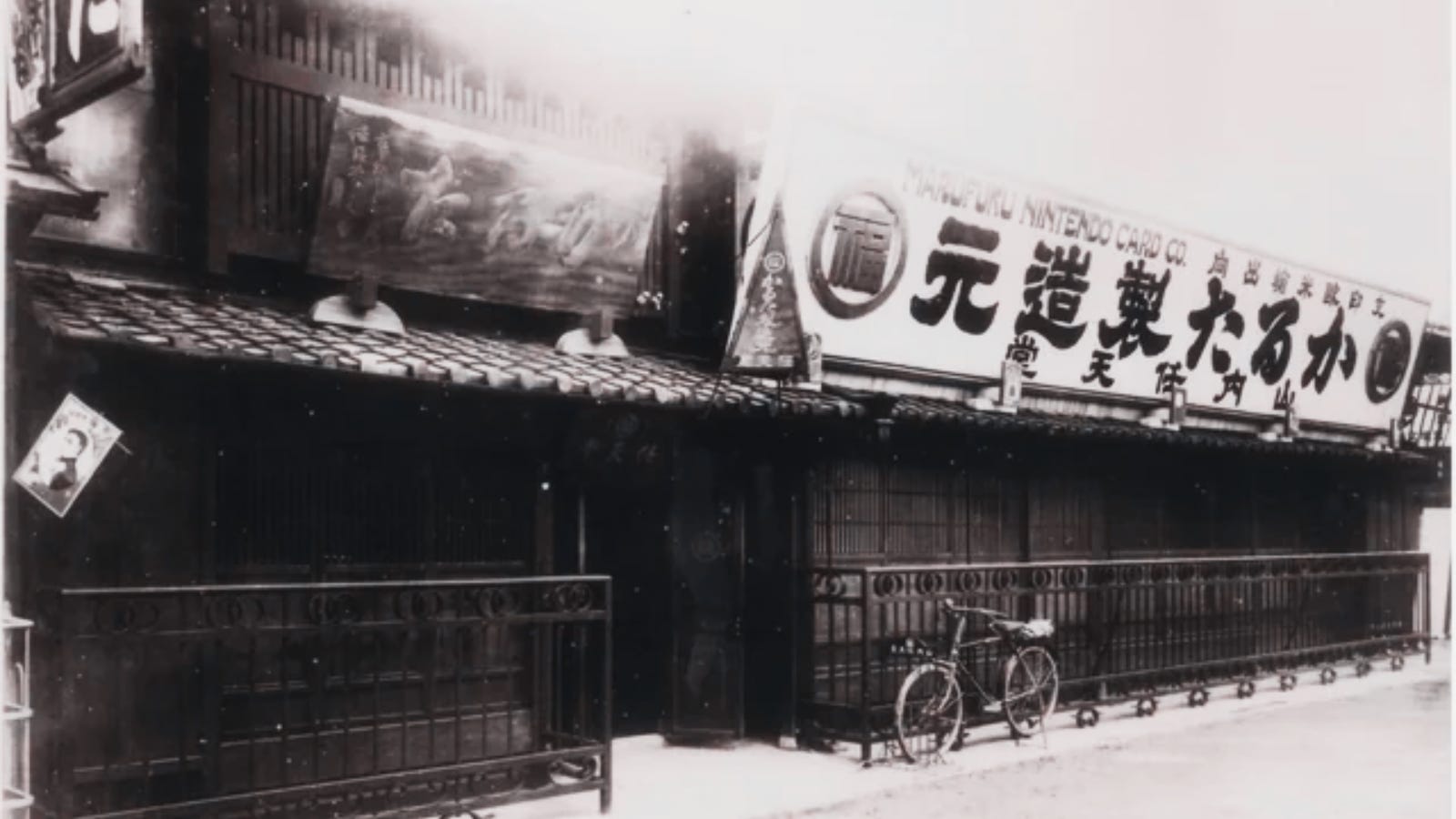
Nintendo. Founded in Kyoto in 1889 making handmade flower cards. In the 1960s it went hunting for growth: instant rice, a love hotel renting rooms by the hour, a taxi company called Daiya. Registered, funded, serious. All of it dead. The company nearly went under, and the lesson it carried out was that it had exactly one competency: entertainment. Then a maintenance engineer named Gunpei Yokoi built an extending arm for his own amusement, Yamauchi shipped it as a toy, and it sold over a million units. Cards, toys, arcades, consoles, films, theme parks: one sentence has covered every one of them since. It took eighty years to write the sentence.
Apple. By 1997 it had over 350 products, Macs cannibalising each other, printers, scanners, cameras, and no coherent answer to what the company was for. It lost a billion dollars that year and sat ninety days from insolvency. Jobs came back and cut the line from 350 to 10. The turnaround wasn’t a new product. It was a subtraction. Ten years later he announced the iPhone and renamed Apple Computer to Apple Inc. on the same stage. They deleted the product from the company’s own name. Whatever survived was never in the name.
SpaceX. Musk told staff this year that AI revenue will pass every other line of business and account for 99% of the company’s value inside five years. Last quarter: $7.8B in revenue, roughly $4.3B from Starlink and $2.6B from AI. A rocket company’s second-largest line is compute. And the mission didn’t move an inch, the million-satellite orbital datacenter constellation is filed as serving AI applications today and humanity’s multiplanetary future. One sentence pays for rockets and for server racks.
Note: Nintendo needed 80 years to find its sentence. Apple lost its own and bought it back at a price of 340 products. SpaceX rewrote its entire revenue base in about a quarter and never touched the sentence at all.
Products are moves. The sentence is why you're at the table. Lose every product and you're still a company. Lose the sentence and you're a company that sells things.

Run the numbers on yourself
Three questions. One hour, one doc, and you’ll know what you actually have.
Count what you’ve built. Everything shipped, everything queued. Then count what you’d keep with ninety days of cash left. The gap between those two numbers is everything you built without a reason. Apple’s gap was 340.
Name three things you won’t build. Not can’t, won’t. If nothing comes to mind, you don’t have a direction, you have ambition. Ambition takes nothing off the board. A direction is worth exactly the number of decisions it makes for you before you have to make them.
Then delete your product. On paper. Write the next one in one sentence, without naming the old one. Would the same customer still care?
That last one is the whole test. If you can’t write the sentence, you’re not building a company yet. You’re holding a hand.
That isn’t failure. It’s information, the same information I got, and it told me exactly what to do. Take the chips. Find the game first this time.
None of this is new, by the way. Collins and Porras found it in 1994 and called it preserving a core ideology while stimulating progress in everything else. Everything except the sentence is allowed to change. The newest problem in tech has a thirty-year-old answer.
What’s new is the clock. Nintendo had eighty years to find its sentence. Apple had twelve. Nobody building on top of models that ship every few weeks is getting twelve.
So write it now, badly, and fix it later.
Sentence before product.
You can always be dealt a new hand. You can’t be dealt a reason to exist.