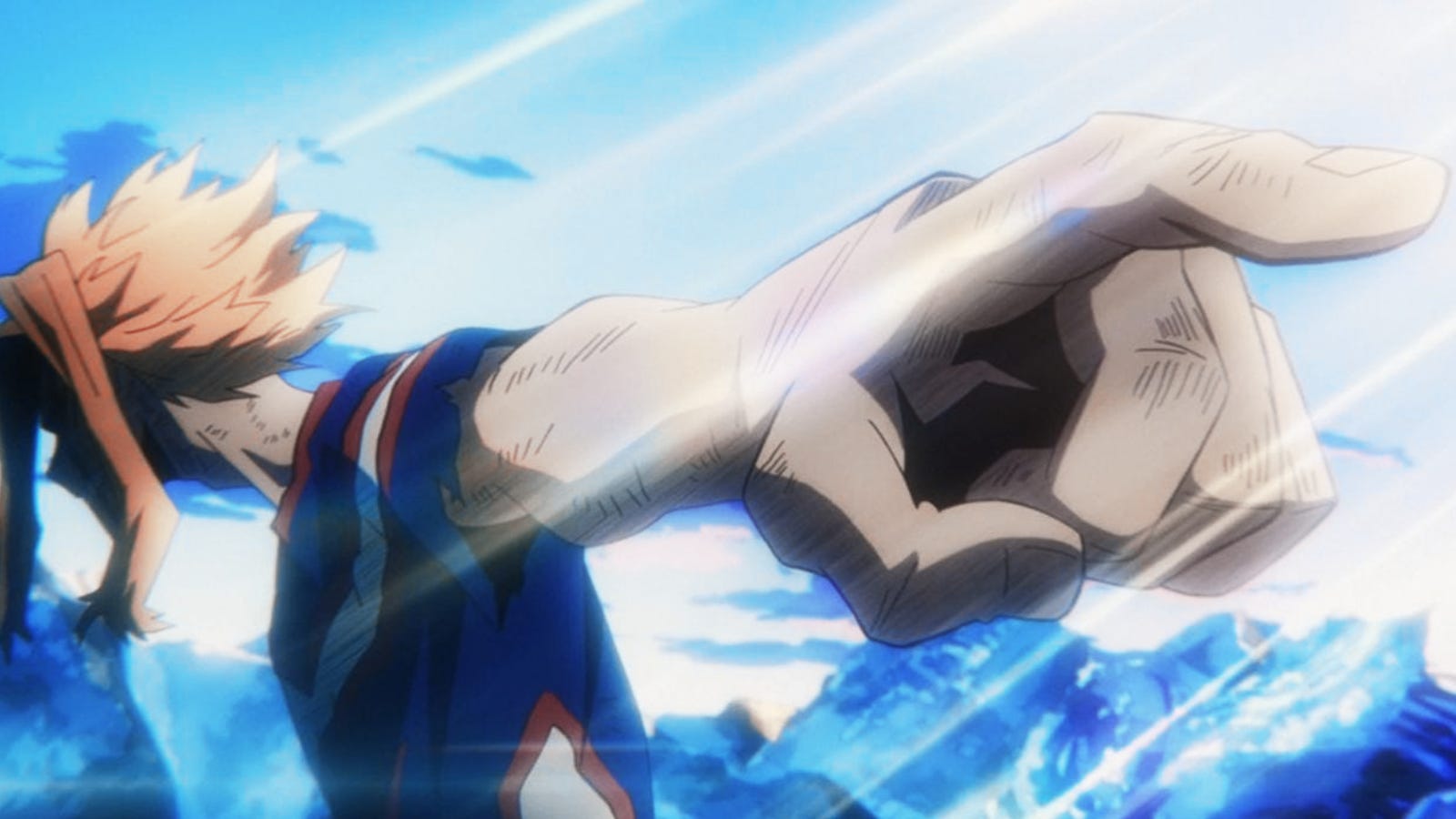
We grew up being told to change the world. Then we watched every person who was supposed to show us how end up in a document dump. This isn't a piece about corruption. It's about what happens to a generation when nobody is left to point at.
Nobody wants to be anybody anymore
Ask a ten-year-old what they want to be. You’ll get a job.
Ask a twenty-five-year-old and you’ll get a number.
Not a role. Not a person they want to become. A target, an exit, an age they’d like to be done by. Somewhere in the last fifteen years, the aspirational script flipped from build something to get out early.
The easy read is that this generation is lazy, greedy, or shallow.
That’s wrong.
Here’s what actually happened.
Gallup tracks sixteen major American institutions. Eleven of them hit the lowest public confidence ever recorded in 2022–23, not lower than last year, lower than ever measured. Congress, the press, big business, the church. Categories with almost nothing in common, failing together. That’s not a run of bad luck. That’s a shared dependency going down.
And then the files.
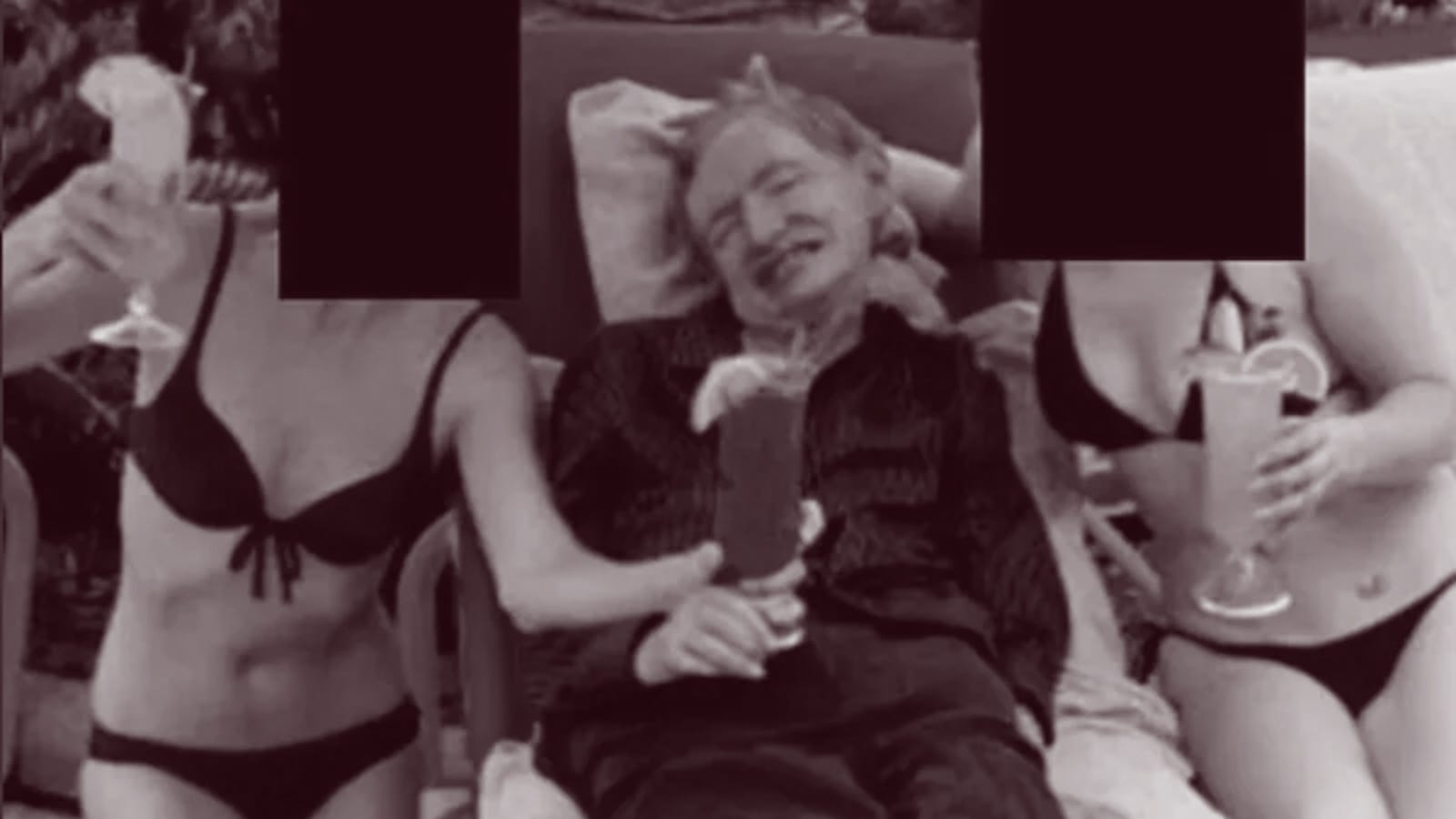
The photos came out, and something worse happened than exposure.
A man who spent fifty years unable to move, who wrote about the origin of the universe with a cheek muscle, ends up in the same document dump as the people who ran the island.
He’s in the files now.
That’s the actual damage.
When everyone at the top is a suspect, admiration itself starts to feel stupid. Naive.
The Wall Street Journal ran a Gen Z writer’s own account of what replaced it, and the name should be in every strategy deck for the next decade: financial nihilism. Not “I want to be rich.” something colder: “The slow honest path stopped clearing, so I’ll take variance instead.” (CNBC found the same thing in the survey data).
The Kobeissi Letter put a number on it: roughly 80% of Gen Z investors say they’re in high-risk speculative assets because they feel financially behind (the highest share of any generation).
Read that clause again. Because they feel behind. Greed is offense. This is defense.
And the tell that it isn’t a values collapse: Deloitte still finds purpose matters to around 89% of Gen Z and 92% of Millennials at work. Nine in ten.
They didn’t stop wanting meaning.
They stopped believing anyone was going to model it for them.
The Symbol of Peace
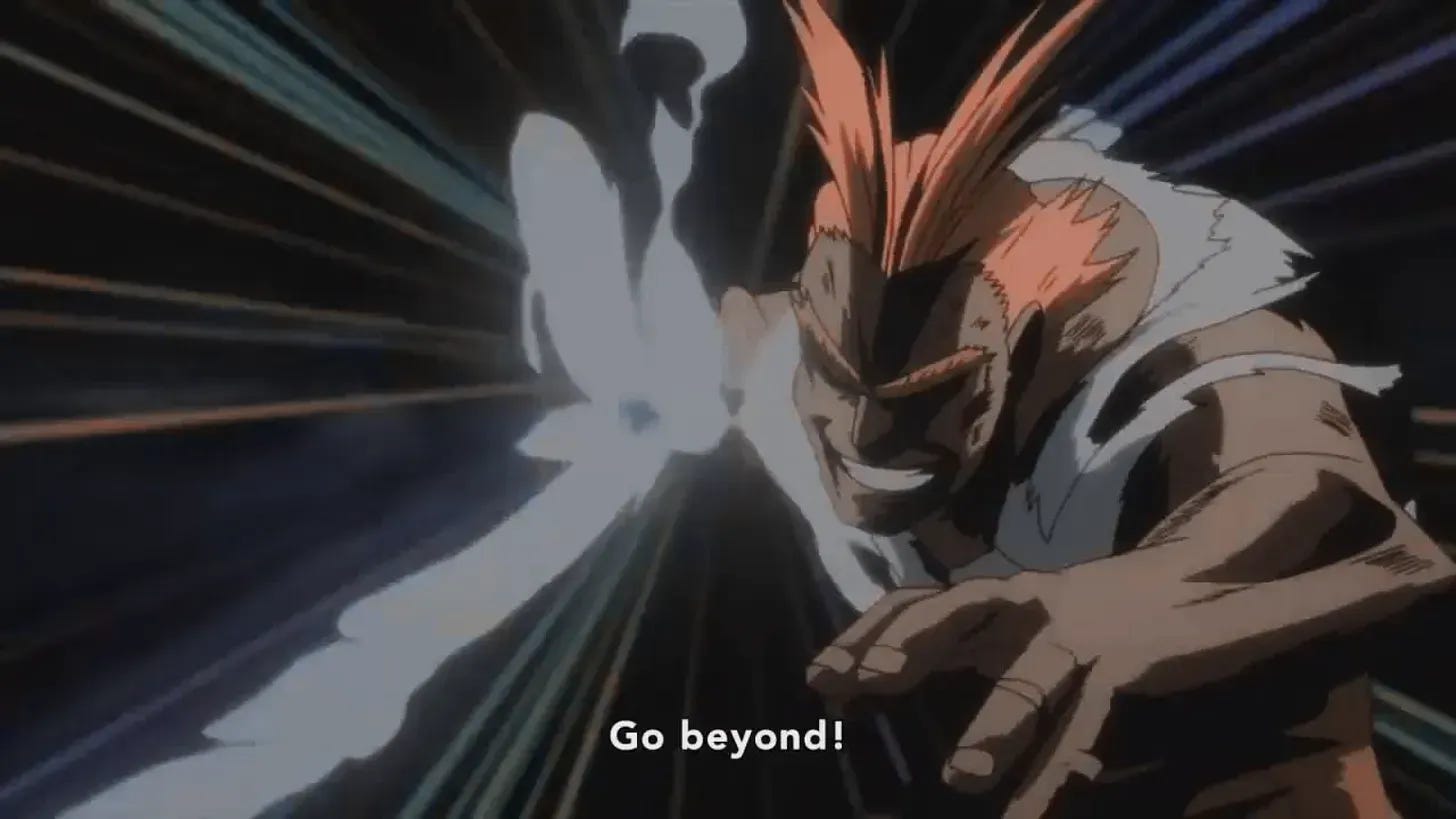
There’s a phrase they shout in that show. It’s what All Might yells before he swings, and what the students yell when they’re out of everything else.
「更に向こうへ、プルスウルトラ!」
Sarani mukō e — Purusu Urutora!
“Further beyond — Plus Ultra!”
A hero isn’t just inspiration. A hero is proof.
Proof that the rules work. That doing the right thing, in public, over years, actually leads somewhere. You can’t verify that yourself, no one lives long enough. So you look for someone who already did it, and you copy them. That’s not sentimentality. That’s how a society transmits what to become.
My Hero Academia builds an entire civilization on exactly this.
All Might isn’t the strongest hero because the story needs one. He’s the Symbol of Peace, a walking demonstration that the system pays out. Crime doesn’t drop in his city because he stops every criminal. It drops because everyone can see him. He’s not just protection. He’s evidence.
He’s also hollowed out. An old injury wrecked him internally; he can hold the form a few hours a day; then he’s coughing blood the second the cameras cut. The whole civilization is standing on a smile he can barely keep on his face.
That’s not a plot hole. That’s the entire point. The symbol was always doing the work, not the man.
Here’s the mechanism, plainly:
Someone does visible good. The system visibly rewards them. Everyone watching infers the rule. They aim their lives at it.
Four steps. That’s the whole machinery by which a culture tells its kids what to be. And notice what it doesn’t require: not virtue, not talent, not moral instruction. Just a visible link between doing good and getting rewarded. Break that link and nothing downstream survives. You can teach ethics all day; people will still route toward whatever they observe actually paying.
The correlation didn’t weaken. It inverted. What the last decade demonstrated, over and over, at the very top, is that proximity to power predicted complicity better than it predicted contribution.
That’s not a moral event. It’s a data event.
That’s what an honest observer does.
So we’re not short on ambition. We’re short on proof.
Nobody wants to grow up to be anyone, because naming a person now feels like a bet you’ll lose in five years when the next tranche drops.
You don’t build a life on someone who might turn out to be in a folder.
So Where Do We Look?
Napoleon wanted to be Caesar.
Caesar wanted to be Alexander.
Alexander wanted to be Achilles.
And Achilles never existed.
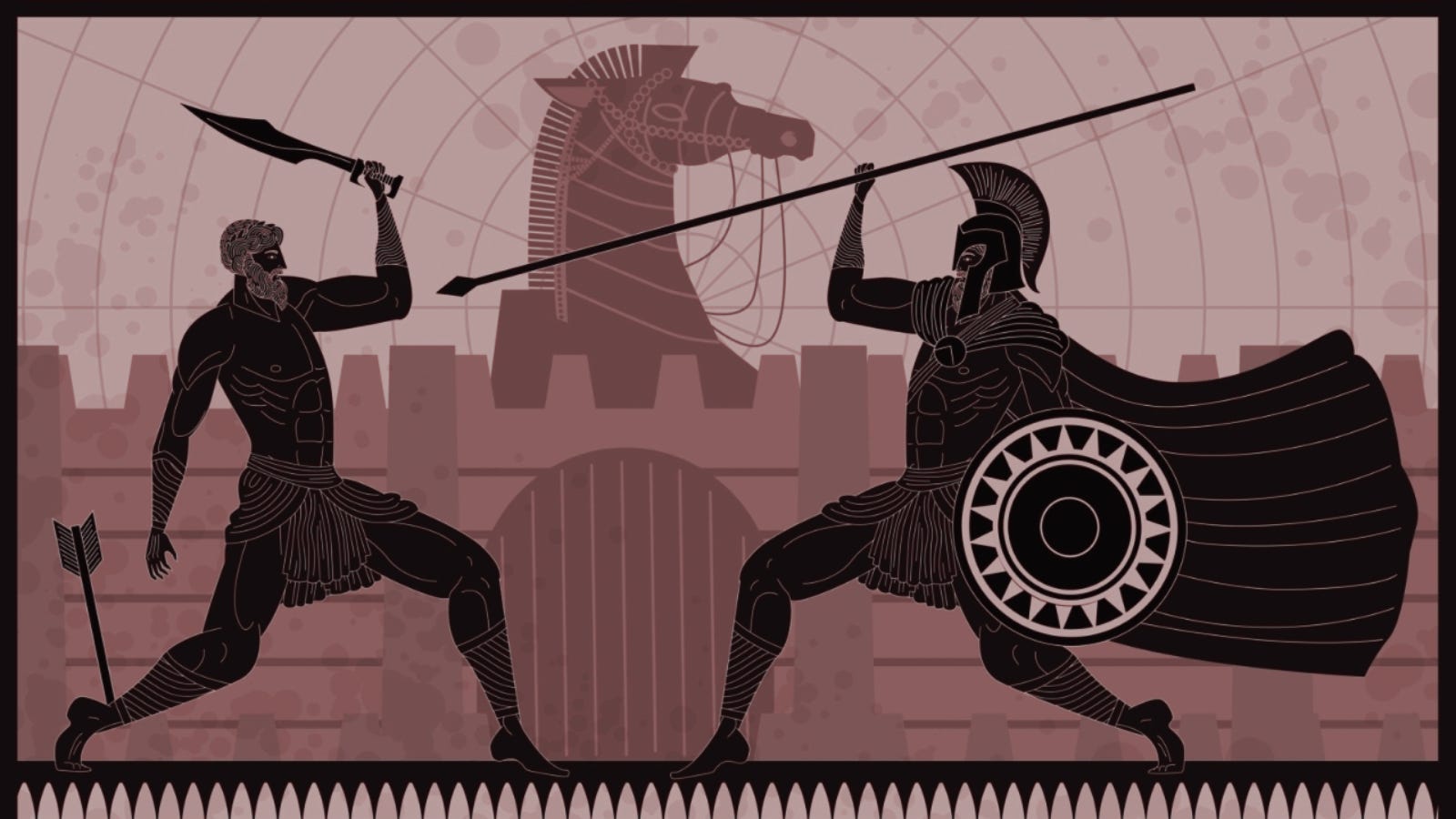
Follow that chain all the way down and it ends in a poem. The most consequential lives in Western history were built, one link at a time, on a man who was (probably) never born.
The model doesn’t have to be real. It has to be legible enough to aim at.
That’s the thing we forgot while we were busy being disappointed.
So when I say there are no heroes left, I’m being imprecise. What we lost is the institutional supply: the credentialed, photographed, publicly rewarded kind, the kind that comes with a foundation and a keynote and an eventual scandal.
That supply is gone and it isn’t coming back.
But the model was never in the man. It was in the story.
And we have more stories than anyone in history. All Might. Achilles. Whoever you were obsessed with at fourteen. We call that childish. It isn’t. It’s the same thing Alexander was doing with the Iliad, just with better distribution.
So go find yours. Not a person to trust. A trait to steal. The calm one. The one who kept their word when it cost them. The one who got up.
Take the trait. Leave the person. That’s the whole method.
Then the part nobody says out loud: at some point you stop copying and start being copied.
Because the chain runs forward too. Caesar was Napoleon’s Achilles. Somebody is already watching how you handle the thing you’re handling right now.
You’ll never be a Symbol of Peace. Neither will I.
But you can be the one who didn’t fudge the number when fudging it was free. You can be somebody’s Achilles without ever knowing it. That version can’t be taken from you later.
All Might didn’t leave a statue. He left one kid, in a gym, and two words:
You’re next.
We must become the heroes we needed.